


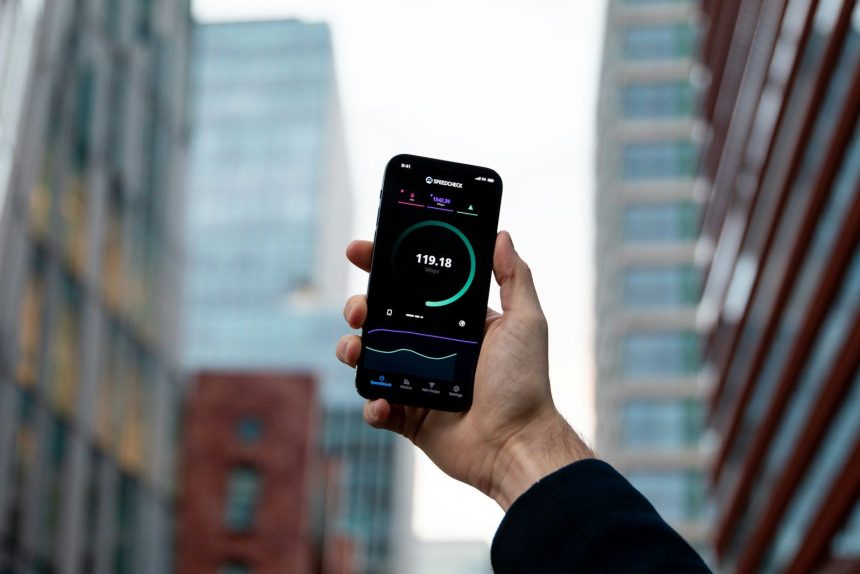
5G and Its Potential: Collaboration has changed dramatically over the last decade. Teams no longer need to sit around the same conference table to work on a project, review documents, talk to customers, or make important decisions. Video meetings, cloud applications, instant messaging, shared documents, and project-management platforms have made distributed work possible.
- What Is 5G?
- Why Connectivity Matters for Collaboration
- 5G and Remote Work
- Improving Video Conferencing
- Faster Cloud Collaboration
- Working With Large Files
- 5G and Augmented Reality Collaboration
- Virtual Reality and Immersive Meetings
- Connected Offices and Smart Workspaces
- Supporting Hybrid Meetings
- 5G for Field Teams
- Real-Time Remote Assistance
- 5G and Team Communication
- Network Capacity for Connected Teams
- 5G and Internet of Things Collaboration
- 5G and Business Travel
- Supporting Temporary Worksites
- Private 5G Networks for Businesses
- Security Considerations
- 5G Is Not Available Everywhere
- 5G Does Not Replace Good Collaboration Practices
- How Small Businesses Can Prepare for 5G
- The Future of Collaboration With 5G
- FAQs About 5G and Its Potential
But there is still a frustrating reality: digital collaboration is only as good as the connection supporting it.
A frozen video call can interrupt an important presentation. Lag can make conversations awkward. Slow uploads can delay large files. Unstable connections can make remote workers feel disconnected from the rest of the team.
This is where 5G technology enters the conversation.
5G, the fifth generation of mobile communications, is designed to provide higher data rates, lower latency, increased network capacity, and support for a large number of connected devices. Those capabilities could create new possibilities for how businesses communicate and collaborate.
Of course, 5G is not a magic solution. Network performance varies by location, carrier, device, spectrum, and network conditions. Businesses also need appropriate software, security, and infrastructure.
Still, the potential is significant.
From smoother video meetings and faster cloud access to augmented reality, connected workplaces, mobile teams, and real-time collaboration, 5G could become an important part of the future of digital teamwork.
What Is 5G?
5G stands for the fifth generation of mobile network technology.
It follows earlier generations such as 3G and 4G, bringing improvements designed for modern connectivity requirements.
While people often associate 5G primarily with faster smartphone downloads, its capabilities extend beyond speed.
Important characteristics can include:
- Higher data throughput
- Lower latency
- Greater network capacity
- Improved support for connected devices
- More flexible network architectures
- Better support for demanding applications
These characteristics matter because collaboration is becoming increasingly data-intensive.
Teams are no longer exchanging only text messages and small documents. They are working with high-resolution video, large design files, cloud applications, virtual environments, live data streams, and connected devices.
Why Connectivity Matters for Collaboration
Think about a virtual meeting.
One employee is speaking from a home office. Another is presenting slides from a coworking space. A third participant is joining from a mobile device while traveling.
If one connection becomes unstable, the entire experience can suffer.
People start talking over one another because of delays. The video becomes blurry. Screens stop updating. Participants miss information.
A reliable connection may not receive much attention when everything works perfectly, but its importance becomes obvious when it fails.
5G has the potential to improve some of these experiences by providing stronger mobile connectivity and lower latency where suitable coverage and network infrastructure are available.
5G and Remote Work

Remote work has become an important part of modern business.
Employees may work from home, travel between offices, visit clients, or operate from locations where fixed broadband is unavailable or inconvenient.
5G can provide an additional connectivity option for these workers.
A laptop or mobile hotspot connected to a 5G network could potentially provide fast internet access without requiring a traditional wired connection.
Greater Flexibility for Mobile Employees
Imagine a sales representative traveling between customer locations.
Instead of depending entirely on whatever Wi-Fi happens to be available, the employee may use a secure mobile connection to access company systems.
Similarly, field technicians, consultants, journalists, healthcare workers, and event teams can benefit from reliable mobile connectivity when working away from traditional offices.
5G does not eliminate the need for secure access, but it can expand where productive work is possible.
Improving Video Conferencing
Video meetings are now a normal part of business.
Platforms for virtual meetings depend heavily on network quality.
High-quality video requires considerable bandwidth, especially when several participants share cameras, screens, presentations, or high-resolution content.
5G can potentially support smoother mobile video communication.
Lower Latency for More Natural Conversations
Latency refers to the delay between an action and its result.
In a video meeting, even a small delay can make conversation feel unnatural.
Someone asks a question.
The other person answers.
But because of network delay, both participants may speak at the same time.
Lower latency can make interactive communication feel more responsive.
The exact experience depends on the entire connection—from the device and radio network to the application and internet services involved.
Faster Cloud Collaboration
Many businesses have moved their files and applications to the cloud.
Employees may work on shared documents, access customer databases, use cloud-based accounting platforms, edit media files, or manage projects online.
This creates a simple requirement:
The faster and more reliable the connection, the easier cloud-based work can feel.
5G can provide high-speed mobile connectivity that may make cloud collaboration more practical in locations where fixed broadband is limited.
Working With Large Files
Some industries regularly work with large digital files.
Graphic designers may exchange high-resolution images.
Video production teams may work with large media files.
Architects may share detailed models.
Engineers may transfer complex technical data.
Sending these files over slow connections can become a major bottleneck.
With appropriate 5G coverage and performance, mobile teams may be able to upload and download large files more efficiently.
That can reduce waiting time and make distributed workflows easier to manage.
5G and Augmented Reality Collaboration
One of the more exciting possibilities involves augmented reality, or AR.
AR overlays digital information onto the physical world.
With suitable hardware and software, employees could potentially collaborate while viewing shared digital information in their physical environment.
Imagine a technician inspecting industrial equipment.
A remote expert could see what the technician sees and provide visual guidance.
Instead of describing a component verbally, the expert might point to the relevant part in a shared digital environment.
Remote Training With AR
AR could also support employee training.
A new technician might receive step-by-step digital instructions while working with real equipment.
A trainer could potentially observe the process remotely and provide guidance.
5G’s low-latency characteristics could support these interactive experiences, although the quality depends on the complete technical setup.
Virtual Reality and Immersive Meetings
Virtual reality, or VR, offers another possible collaboration model.
Instead of seeing colleagues in small video windows, participants could meet inside a shared virtual environment.
They might examine a 3D model, walk through a virtual building, or conduct training exercises.
VR applications can require substantial data and responsive connections.
5G may help support these experiences, particularly in mobile or distributed environments.
Collaborating on 3D Designs
Consider an architecture firm with teams in different cities.
Instead of discussing a building design through a traditional video meeting, employees could potentially enter a shared 3D environment.
They could examine the structure from different angles, discuss materials, and identify design issues together.
This does not mean every meeting needs VR.
Traditional video calls remain more practical for many tasks.
But 5G could help make immersive collaboration more feasible for specialized use cases.
Connected Offices and Smart Workspaces
5G is also relevant to the development of connected workplaces.
Modern offices can contain numerous connected devices:
- Smart lighting
- Environmental sensors
- Security systems
- Conference-room equipment
- Occupancy sensors
- Digital displays
- Connected appliances
A 5G-enabled environment could support communication between many devices.
This can potentially improve workplace efficiency.
For example, occupancy sensors might provide information about which meeting rooms are being used.
Employees could then find available spaces more easily.
Supporting Hybrid Meetings
Hybrid meetings combine people in a physical room with participants joining remotely.
This setup can be challenging.
Remote participants may struggle to hear conversations or see presentations clearly.
Better connectivity can support higher-quality video and audio streams.
5G could also make it easier to deploy portable cameras, microphones, displays, and other connected equipment in temporary meeting environments.
This could be particularly useful for conferences, events, training sessions, and temporary project locations.
5G for Field Teams
Some businesses have employees who rarely work at a desk.
Construction teams, transportation workers, utility technicians, emergency personnel, healthcare workers, and maintenance crews may need access to information while moving between locations.
5G can provide mobile connectivity that supports real-time communication.
A field employee could potentially access:
- Digital work orders
- Customer information
- Technical documentation
- Live video assistance
- Inventory information
- Mapping systems
- Cloud applications
This can reduce dependence on returning to an office to retrieve information.
Real-Time Remote Assistance
Imagine a machine in a remote location develops a problem.
A technician on-site could use a mobile device to stream live video to an expert somewhere else.
The expert can observe the equipment and guide the technician through troubleshooting.
With sufficient network performance, this type of remote assistance can become more responsive.
For businesses with specialized expertise, that could be valuable.
One expert may be able to support multiple field teams without physically traveling to every location.
5G and Team Communication
Collaboration is not only about video calls.
Teams rely on voice communication, messaging, file sharing, notifications, and other forms of digital interaction.
5G can provide another layer of connectivity for employees who move between locations.
A worker could potentially stay connected to company communication systems while traveling between offices, customer sites, warehouses, or other locations.
This supports the idea of a more mobile workforce.
Network Capacity for Connected Teams

Another important characteristic of 5G is increased capacity.
Businesses are connecting more devices than ever.
A modern workplace might contain laptops, phones, tablets, sensors, cameras, printers, conference systems, security equipment, and other connected devices.
As the number of devices grows, networks need to handle more simultaneous connections.
5G technologies are designed with high-density connectivity scenarios in mind.
That could become increasingly important as businesses deploy more connected devices.
5G and Internet of Things Collaboration
The Internet of Things, or IoT, refers to physical devices connected to digital networks.
In business environments, IoT devices can collect and transmit information about equipment, inventory, environmental conditions, and operations.
5G can support certain IoT deployments, particularly where high device density, mobility, or low latency is valuable.
Example: Connected Manufacturing
A manufacturing facility could use sensors to monitor equipment.
Data from those sensors can be analyzed to identify unusual patterns.
Employees in different departments could access the information through shared dashboards.
Maintenance teams could respond to problems before equipment failure becomes a major disruption.
The technology combines connectivity, sensors, analytics, and human decision-making.
5G is one potential component of that ecosystem.
5G and Business Travel
Business travelers often struggle with unreliable connectivity.
Hotel networks may be crowded.
Airport Wi-Fi can be inconsistent.
Remote locations may have limited broadband options.
A 5G-enabled mobile connection can provide another way to stay connected.
This can make it easier for employees to join meetings, access cloud applications, communicate with colleagues, and respond to customers while traveling.
Supporting Temporary Worksites
Not every project has a permanent office.
Construction projects, outdoor events, film productions, disaster-response operations, and temporary research sites may require communication infrastructure for a limited period.
5G connectivity can potentially support these temporary environments.
Portable network equipment can provide connectivity without requiring the same physical infrastructure as a traditional office.
That flexibility can be useful for businesses that regularly move between locations.
Private 5G Networks for Businesses
Some organizations may eventually deploy private 5G networks.
A private network is designed for a specific organization or location rather than serving the general public.
Potential use cases include:
- Manufacturing
- Warehousing
- Logistics
- Healthcare
- Research facilities
- Large campuses
Private 5G can give organizations greater control over network performance and connected devices.
However, implementing such a network can involve significant cost, technical expertise, equipment, and regulatory considerations.
It is therefore more relevant to organizations with specific connectivity requirements than to every small business.
Security Considerations
Faster connectivity does not automatically mean safer connectivity.
Businesses still need appropriate security controls.
These may include:
- Strong authentication
- Encryption
- Device management
- Network segmentation
- Access controls
- Secure applications
- Regular software updates
- Employee security training
As more devices become connected, the number of potential entry points can also increase.
A connected device should therefore be treated as part of the organization’s security environment.
5G Is Not Available Everywhere
One important limitation is coverage.
5G availability varies by country, carrier, spectrum, location, device, and network deployment.
Even where 5G is available, performance can differ significantly.
Buildings, distance from network equipment, network congestion, and other factors can affect the actual experience.
Businesses should therefore evaluate connectivity based on their specific locations and requirements rather than assuming that 5G will automatically provide the same performance everywhere.
5G Does Not Replace Good Collaboration Practices
Technology can improve communication, but it cannot fix poor teamwork.
A team with a perfect internet connection can still suffer from:
- Unclear responsibilities
- Poor documentation
- Too many meetings
- Confusing communication
- Weak project management
- Lack of accountability
5G should therefore be viewed as an enabler.
It can make certain workflows faster and more responsive, but teams still need good processes.
How Small Businesses Can Prepare for 5G

Small businesses do not necessarily need to rush into major 5G investments.
Instead, start by understanding where connectivity problems affect productivity.
Do employees regularly struggle with poor mobile connections?
Do field workers need better access to cloud systems?
Are large files difficult to transfer?
Do hybrid meetings suffer from unreliable connections?
Are temporary worksites difficult to connect?
If the answer is yes, 5G may be worth investigating.
Evaluate Actual Business Needs
Before investing, consider:
- Coverage in relevant locations
- Compatible devices
- Carrier plans
- Security requirements
- Expected data usage
- Application requirements
- Total costs
Technology should solve a problem rather than become another expense.
The Future of Collaboration With 5G
The most interesting aspect of 5G may not be faster smartphone browsing.
Its larger impact could come from enabling new types of connected experiences.
As devices become more capable and cloud services become more powerful, businesses can combine 5G with artificial intelligence, augmented reality, virtual reality, robotics, IoT sensors, and edge computing.
That combination could create collaboration environments that feel very different from today’s video calls and shared documents.
A technician could work alongside a remote expert through augmented reality.
A global design team could examine a virtual 3D prototype together.
A field worker could stream real-time equipment information to specialists.
A temporary project site could operate with portable high-speed connectivity.
These possibilities show why 5G is more than a speed upgrade.
In conclusion, 5G has the potential to reshape collaboration by improving mobile connectivity, supporting lower-latency applications, connecting more devices, and enabling new forms of remote interaction.
For virtual and hybrid teams, that could mean smoother video meetings, faster cloud access, better support for mobile employees, and more reliable communication from locations outside traditional offices.
The technology could become even more interesting when combined with augmented reality, virtual reality, Internet of Things devices, artificial intelligence, and edge computing.
But businesses should keep expectations realistic. 5G does not automatically guarantee perfect connectivity, and it cannot replace good collaboration practices, cybersecurity, or thoughtful technology planning.
The real opportunity is to identify where connectivity is limiting productivity and determine whether 5G can solve that specific problem.
Think of 5G as a wider highway for the digital workplace. A wider highway can help more vehicles move efficiently, but it does not determine where those vehicles should go. Businesses still need clear destinations, good processes, and responsible drivers.
As 5G networks continue to develop, collaboration may become increasingly mobile, immersive, and real-time. The office of the future may not be defined by a particular building at all. Instead, it may be defined by the ability of people, devices, and digital systems to work together wherever they happen to be.
FAQs About 5G and Its Potential
1. How can 5G improve business collaboration?
5G can support collaboration through higher data rates, potentially lower latency, greater network capacity, and improved mobile connectivity. These capabilities can help with video conferencing, cloud applications, remote assistance, connected devices, and other data-intensive collaboration tools.
2. Can 5G replace Wi-Fi for businesses?
Not necessarily. 5G and Wi-Fi serve different purposes and can complement one another. Businesses may use Wi-Fi for offices and indoor environments while using cellular connectivity for mobile workers, field teams, temporary locations, or backup connectivity.
3. Can 5G improve remote work?
5G can provide high-speed mobile internet access for remote employees, particularly in locations where fixed broadband is limited or unreliable. The actual benefit depends on network coverage, device compatibility, carrier performance, and the applications being used.
4. How could 5G support augmented and virtual reality?
AR and VR applications can require substantial data and responsive connections. 5G’s potential for high throughput and low latency can support some immersive collaboration experiences, such as remote assistance, virtual training, and shared 3D environments.
5. Should every small business invest in 5G now?
Not necessarily. Businesses should first identify actual connectivity problems and determine whether 5G addresses them. Coverage, device requirements, pricing, security, and the needs of employees should all be considered before making an investment.


